
Keep regional public guidance aligned — without replacing anyone's system.
In a regional incident, state, county, tribal, and partner agencies each send their own alerts. PHapp® gives every one of them a stable, multilingual public destination for local guidance — so residents and partners reach the same current information, while each jurisdiction keeps its own authority and its existing alert tools.
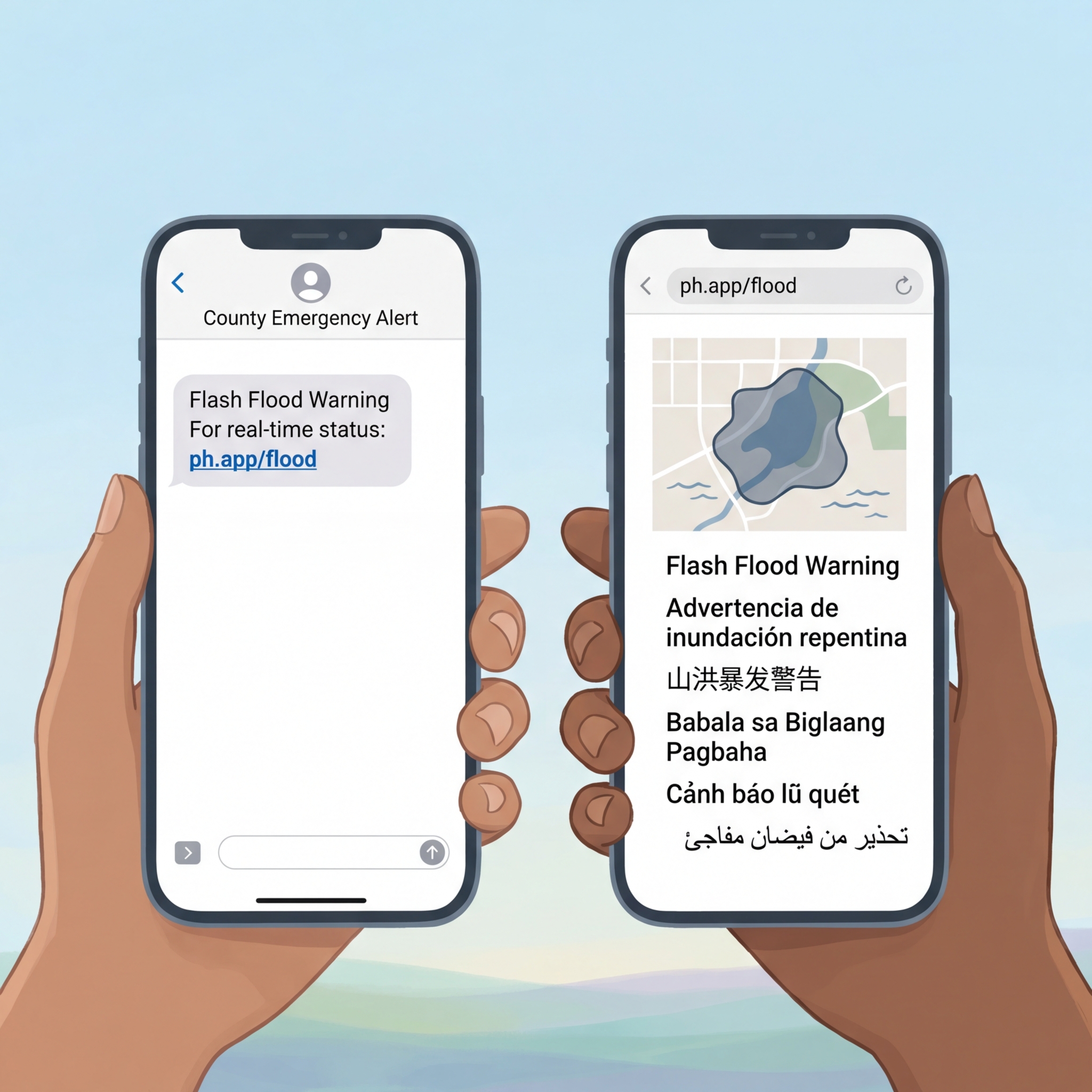
When an incident crosses jurisdictions, public guidance fragments.
A flood, smoke event, or outbreak rarely stops at a county line — but the public messaging usually does.
- Residents get conflicting or missing information depending on which jurisdiction they happen to follow.
- Partners don't know where to point people — hospitals, clinics, schools, and community organizations need one current place to send residents.
- Language access falls through the cracks when each agency handles translation on its own, under pressure.
- Everyone rebuilds the same guidance — multiple agencies write near-identical updates instead of pointing to one source.
It sits alongside the alert channels you already use.
PHapp® is the destination behind your alerts, not another siren competing with them.
Keep your mass notification system and the internal networks you use to coordinate with hospitals, clinicians, and partner agencies. Each urgent push still goes out the way it does today. PHapp® adds the stable, multilingual public page that message points to — one link that stays current as the situation changes, in the resident's language, with no app or account required to read it on the web.
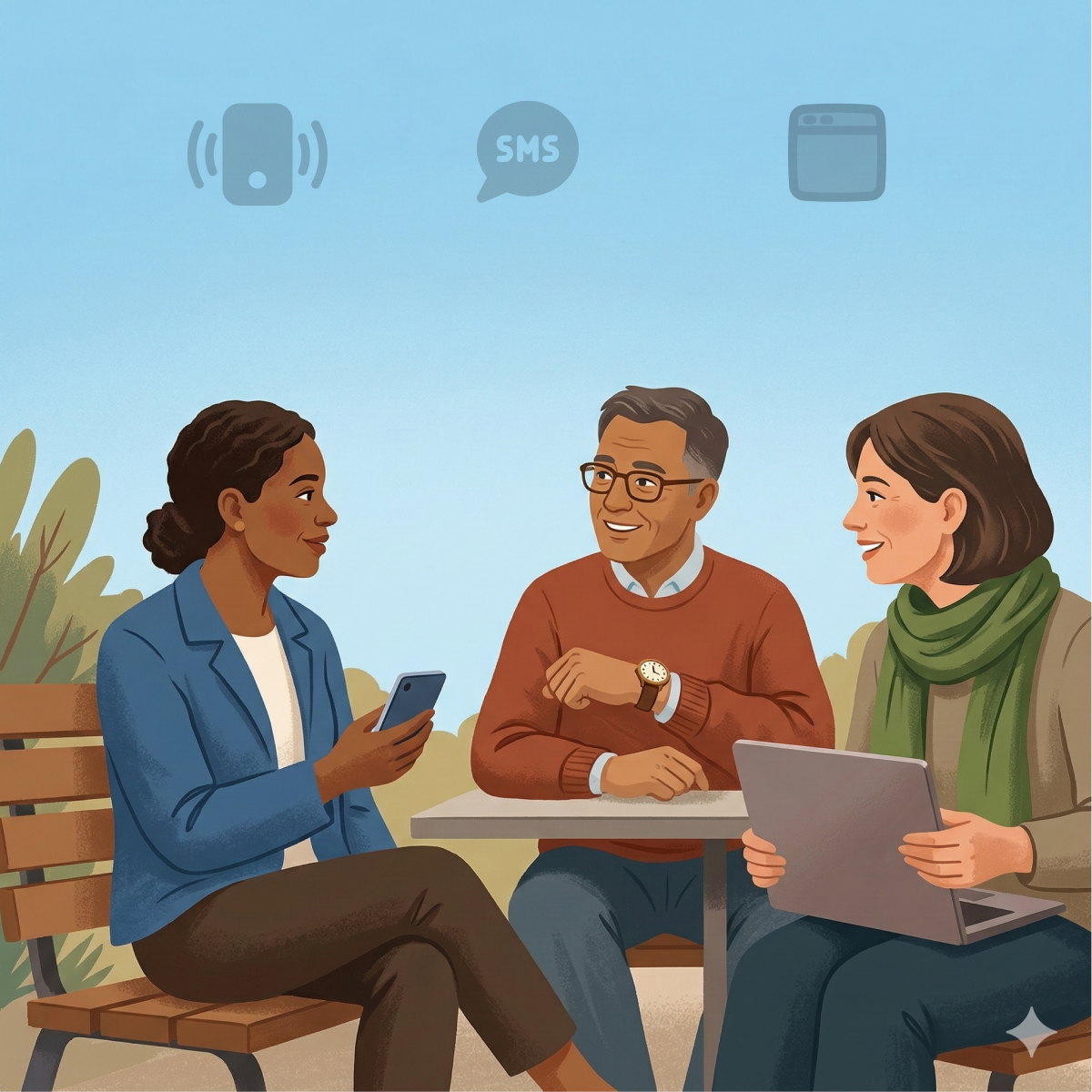
A shared surface that preserves local authority.
Every jurisdiction keeps control of its own message. Nothing publishes on your behalf.
Regional coordination shouldn't mean giving up local control. With PHapp®:
- Each jurisdiction publishes its own co-branded guidance — your name, your message, your authority.
- Partners link to the same current page — providers, schools, and community organizations point residents to one place instead of forwarding screenshots.
- Residents see what's relevant to their community and can read it in their language.
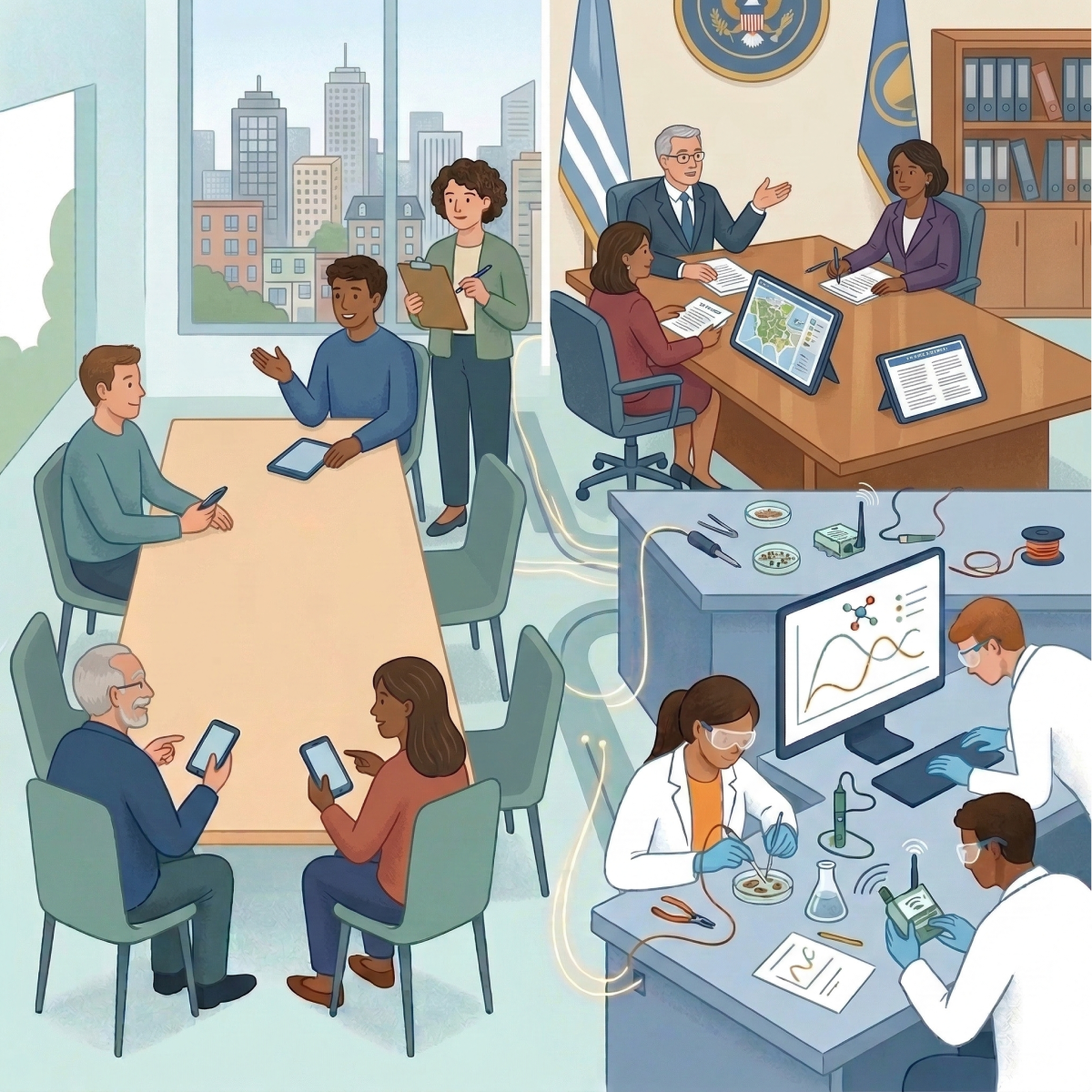
What every jurisdiction gets.
One stable link
A single multilingual destination for local guidance and next steps — usable in alerts, websites, social posts, flyers, QR codes, and partner outreach.
Stable guidance links50+ human-reviewed languages
Guidance opens in the resident's selected language, so regional reach doesn't stop at English.
See language accessWorks with existing channels
PHapp® complements mass notification and the channels you already run, instead of replacing them.
How PHapp fitsVerified sources
Official sources — CDC, NWS (NOAA), FDA, USDA, and your local agencies — so partners and residents trust what they read.
About verified sources
Already coordinating verified public guidance across Arizona.
Hub runs regional public alerting in Arizona today — live across Arizona counties and available free to tribal nations — in collaboration with the University of Arizona and the Arizona Department of Health Services.
- 3,432 communities served across the network.
- 3.35M+ alerts issued to date.
- NOAA Weather Ready Nation Ambassador™ — multilingual extreme-weather guidance alongside official NWS sources.
Coordinating across jurisdictions in your region?
We'll show you how PHapp® gives every agency, provider, and partner one stable multilingual destination — alongside the alert systems you already use.
Common questions
Does this replace our mass notification or internal alerting system?
No. PHapp® complements the systems you already use to push urgent alerts and to coordinate internally with hospitals, clinicians, and partner agencies. It adds the stable public destination those alerts point residents to — it doesn't replace your tools.
Who controls each message?
Each jurisdiction does. Agencies publish their own co-branded guidance under their own authority. Nothing publishes on your behalf, and no jurisdiction overrides another.
How do clinicians, schools, and community partners use it?
They point residents to the same current public page instead of forwarding screenshots or rebuilding guidance. One link stays accurate as the situation changes.
What languages are supported?
50+ human-reviewed languages, matched to each resident. Reach us through the Support Hub or request a demo to see it with your region's incident in mind.