
Bring verified public health to every rural community in your state.
Reach rural residents with verified, multilingual health and safety guidance — without overloading the local teams already stretched thin. Implementation-ready and live in weeks, alongside the systems you already use: free for agencies to start, with an optional paid launch package for a funded statewide rollout.
Through the Rural Health Transformation Program, CMS is directing $50 billion to all 50 states over five years — $10 billion a year from FY2026 through FY2030 — to modernize rural health, technology, access, and workforce. PHapp® helps you turn that into public health information residents actually use.
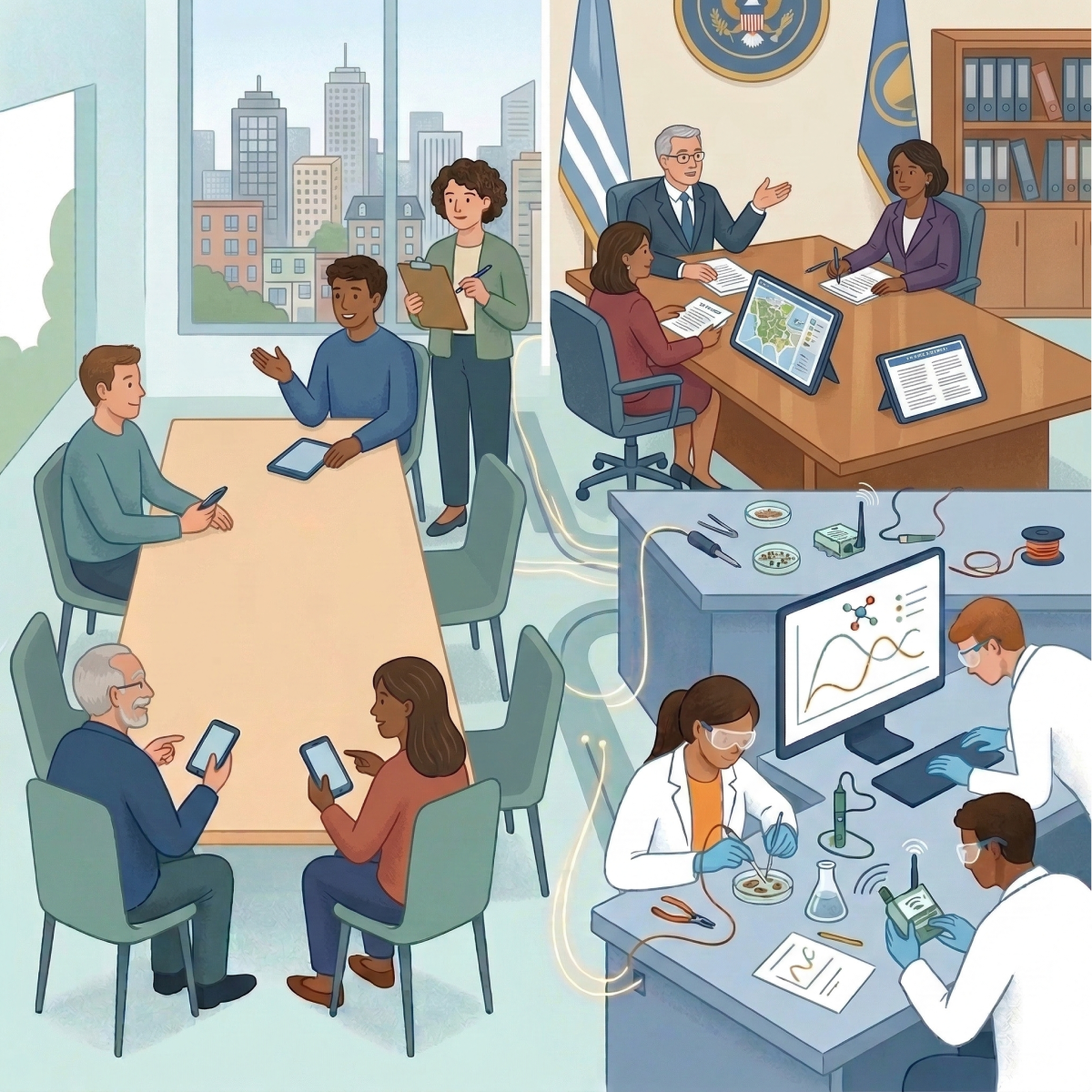
The hard part isn't the funding. It's reaching every rural community with limited staff.
State and rural-health leaders have to show modernization across many small jurisdictions at once — without overloading the local teams who are already stretched thin.
- Many jurisdictions, few staff — rural and frontier agencies often run public communication with one or two people, or none.
- Language and access gaps — residents miss guidance that only arrives in English, by app, or through channels they don't use.
- Results have to be visible — a modernization plan needs something residents can see and use, not just a back-office system.
- No appetite for rip-and-replace — counties want to keep the tools they already have, not start over.
What Hub can do right now — at no cost to agencies.
A free public layer for every community
PHapp® is free for agencies — no contract, no setup fee. Every county and tribal nation gets a co-branded page residents can use by app and web, with SMS/text and email in beta.
How it worksReach residents in their language
Guidance opens in any of 50+ human-reviewed languages, matched to each resident — so rural language access stops being a separate project.
See language accessVerified sources, not noise
PHapp® draws on official sources — CDC, NWS (NOAA), FDA, USDA, and your local agencies — so residents get information they can act on.
About verified sourcesPrivacy by design
No ads, no tracking, no data sales. Information flows out to residents; PHapp® does not gather data back from your community.
Our model
It fits your plan — not a rip-and-replace.
PHapp® strengthens the channels your counties already use instead of asking them to switch systems.
Your alert tools still send the urgent push. Your website stays your official home. PHapp® gives each message one stable, multilingual destination for local guidance and next steps — so a statewide rollout can move quickly without retraining every local team on something new.
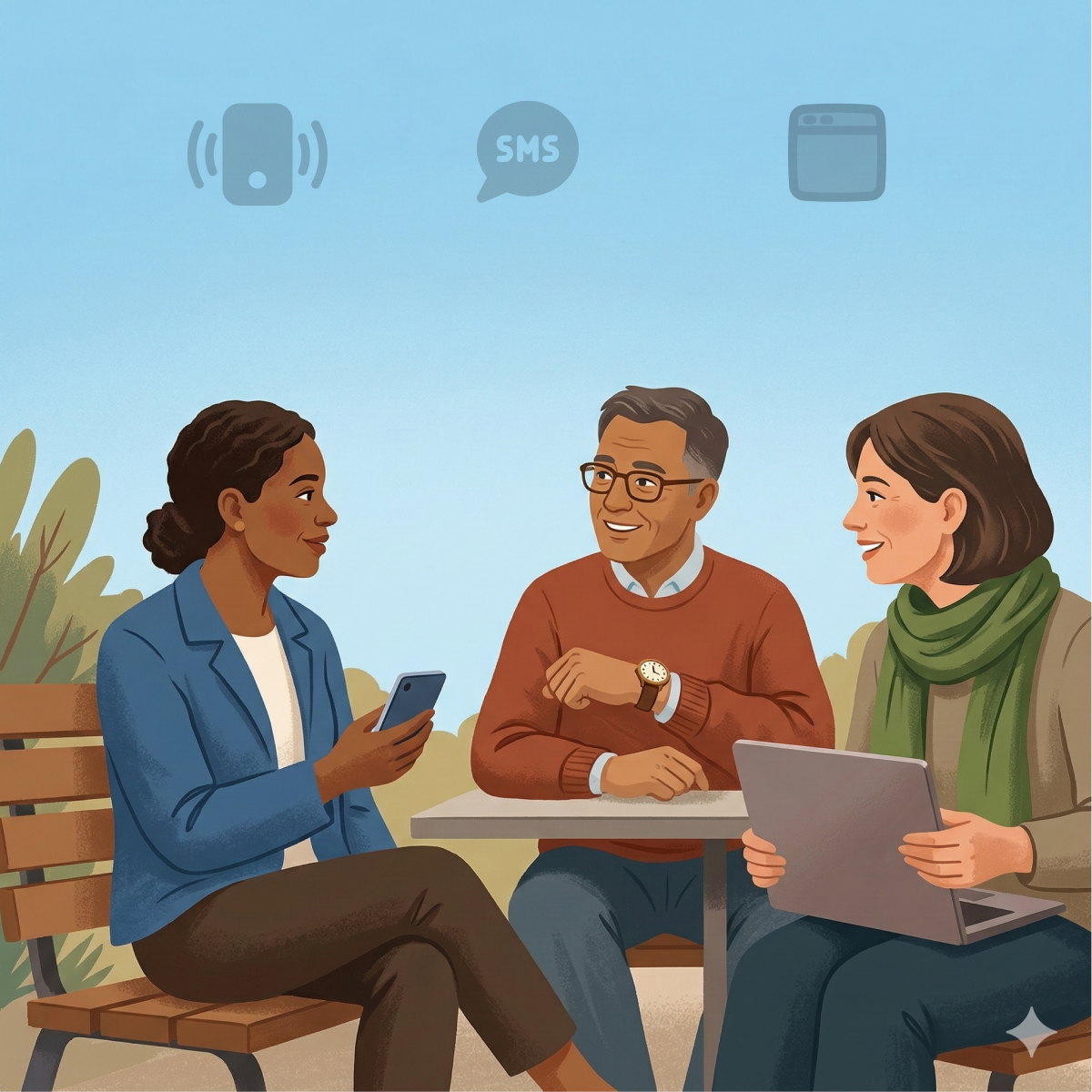
What it is — and what it isn't.
PHapp® is the resident-facing public health layer — not another system to replace what you already run.
- It is a fast way to give rural residents verified, multilingual local guidance and next steps.
- It isn't an EHR, a health information exchange, a mass-notification system, or a state reporting system.
- It works alongside your websites, alert tools, EHRs, and existing workflows — adding the public-facing layer, not replacing your tools.
An implementation-ready launch package.
Agencies adopt PHapp® free. For a funded statewide rollout, the optional launch package gets your communities live fast — and documented.
Free core access covers public alerts, local guidance, multilingual delivery, and the resident-facing app and web experience. For a funded program, the optional launch package adds:
- County and community setup — configure local pages, topics, stable guidance links, and priority health areas.
- Prevention campaigns — launch rural-ready campaigns: extreme heat, wildfire smoke, respiratory illness, overdose prevention, maternal and family health, food safety, and more.
- Existing-channel integration — add PHapp® links and embeds to county websites, alert templates, flyers, QR codes, social posts, clinics, and partner outreach.
- Portal onboarding — give agency teams Portal by Hub for publishing, localization, coordination, and engagement stats.
- Language access — guidance in 50+ human-reviewed languages across app, web, and text.
- Reporting evidence — dashboards, utilization summaries, training records, and launch documentation your program can use as implementation evidence.
This is the model — already running in Arizona.
Hub runs a rural rollout in Arizona today: PHapp® is live across Arizona counties and available free to tribal nations, built in collaboration with the University of Arizona and the Arizona Department of Health Services.
- 3,432 communities served across the network.
- 3.35M+ alerts issued to date.
- 50+ human-reviewed languages for resident-facing guidance.
- NOAA Weather Ready Nation Ambassador™ — multilingual extreme-weather guidance alongside official NWS sources.
Live in weeks. Documented in months.
Because the technology is already live, a rollout moves fast — and produces the evidence a funded program needs to report.
A typical implementation path:
- Weeks 1–4 — kickoff, county configuration, stable guidance links, and Portal access.
- Days 30–90 — launch local guidance and prevention campaigns, then expand to partners and program areas.
- Months 4–5 — a reporting packet: utilization summaries, metrics, training records, and a sustainability plan.
States remain responsible for official RHT Program reporting, eligibility, and funding decisions. Hub provides the implementation and the evidence to support them.
Go deeper.
Implementation & reporting
The launch package, the 90-day path, and the reporting evidence a funded program needs.
See the packageRural prevention campaigns
Turn prevention priorities into multilingual guidance destinations residents can use.
See campaigns
Modernizing rural public health in your state?
Tell us about your communities and your timeline. We'll walk you through what agencies can stand up for free now, and what a funded statewide rollout adds.
Common questions
Is Hub funded by, or an approved vendor for, the Rural Health Transformation Program?
No. The Rural Health Transformation Program is a federal CMS program run through the states. Hub is not an awardee or an approved vendor, and we don't claim eligibility for any specific funding stream. We cite the program only as the context for why states are modernizing rural health right now.
Only states are eligible for RHT awards — how does my health department participate?
That's right: CMS makes RHT awards only to the 50 states. Local health departments typically take part as implementation partners or subrecipients under their state's plan. PHapp® is built to be exactly the kind of implementation-ready, resident-facing project a state can include and a local team can launch quickly.
Is PHapp® really free for agencies?
Yes. Core PHapp® is free for agencies — no contract and no setup fee. Optional paid services are available for implementation, branding, advanced analytics, and automation when a funded program needs them.
Do our counties have to replace their current alert systems?
No. PHapp® works alongside the alert tools, websites, and channels your agencies already use, giving each message one stable multilingual destination for local guidance.
What can a rural agency stand up first?
A co-branded public page with local resources, verified information, and multilingual alerts by app and web — with SMS/text in beta. Reach us through the Support Hub or start a conversation about a statewide rollout.